Best Time of Year to Remove Moss From Roof in the UK
The best time of year to remove moss from roof in the UK is usually spring or early autumn. Mild temperatures, lower frost risk and drier spells make the work safer and help treatments perform properly. Spring helps reduce regrowth before wetter months, while early autumn allows treatment before winter rain, frost and shorter daylight return.
Best months (UK):
- Spring: March to May
- Early autumn: September to October
If you are asking about the best time of year to remove moss from roof surfaces in the UK, the safest answer is usually a mild, dry spell in spring or early autumn.
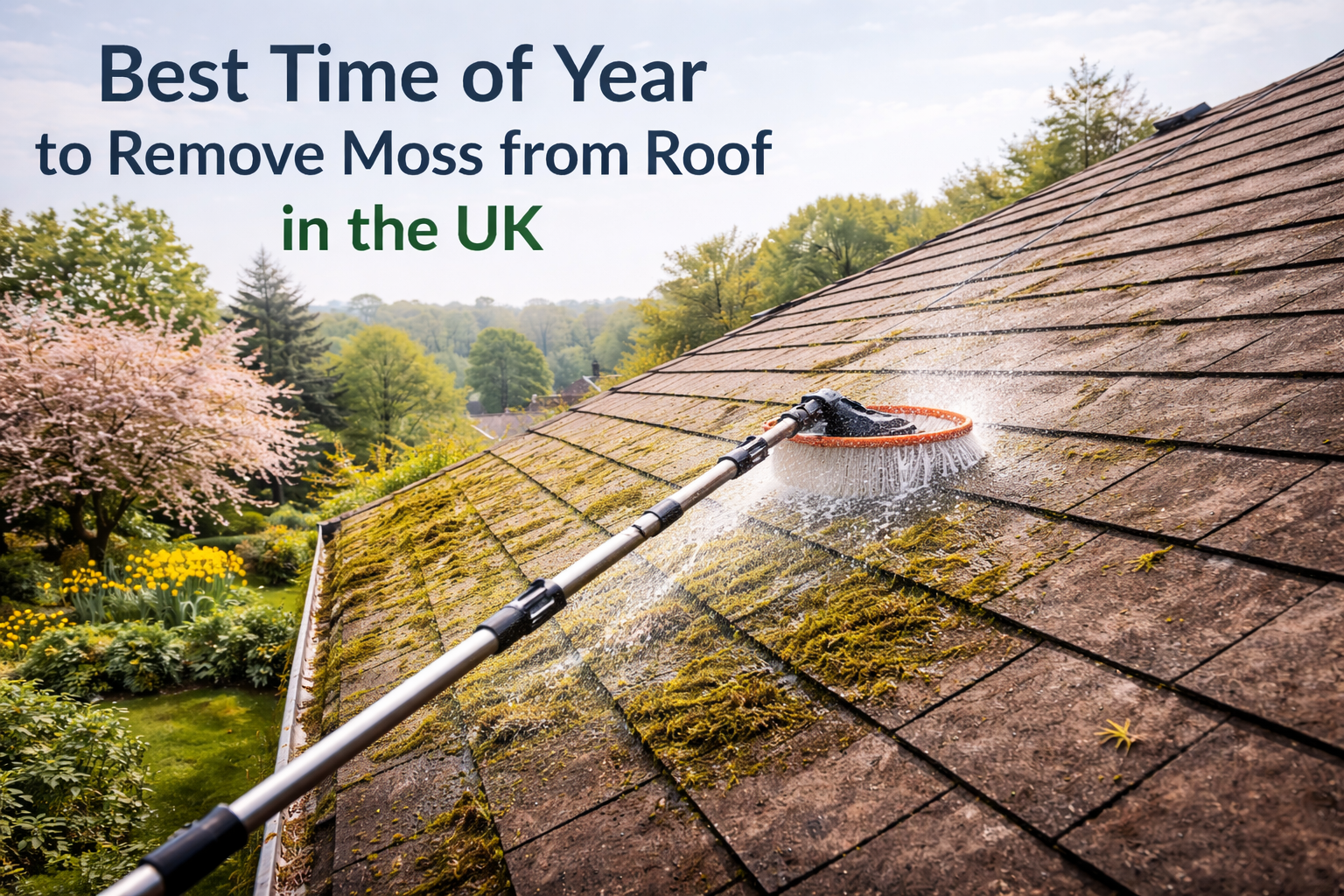
Table of Contents
- Why Timing Matters
- Best Season for Roof Moss Removal
- Best Months for Roof Moss Removal in the UK
- How UK Weather Affects Moss Removal
- How Quickly Does Moss Grow on Roofs?
- Common Mistakes When Removing Roof Moss
- Environmental Factors That Encourage Roof Moss
- What Causes Moss to Grow on Roofs in the UK?
- Signs Your Roof Needs Moss Removal
- Does Roof Moss Damage Roof Tiles?
- Summer vs Winter Moss Removal
- How Often Should Moss Be Removed?
- How to Prevent Moss From Coming Back
- Roof Types Most Affected by Moss in the UK
- Regional Moss Growth Differences Across the UK
- DIY vs Professional Roof Moss Removal
- Frequently Asked Questions
- Conclusion
- Author & Experience
Why Timing Matters for Roof Moss Removal
How Moss Develops on UK Roofs
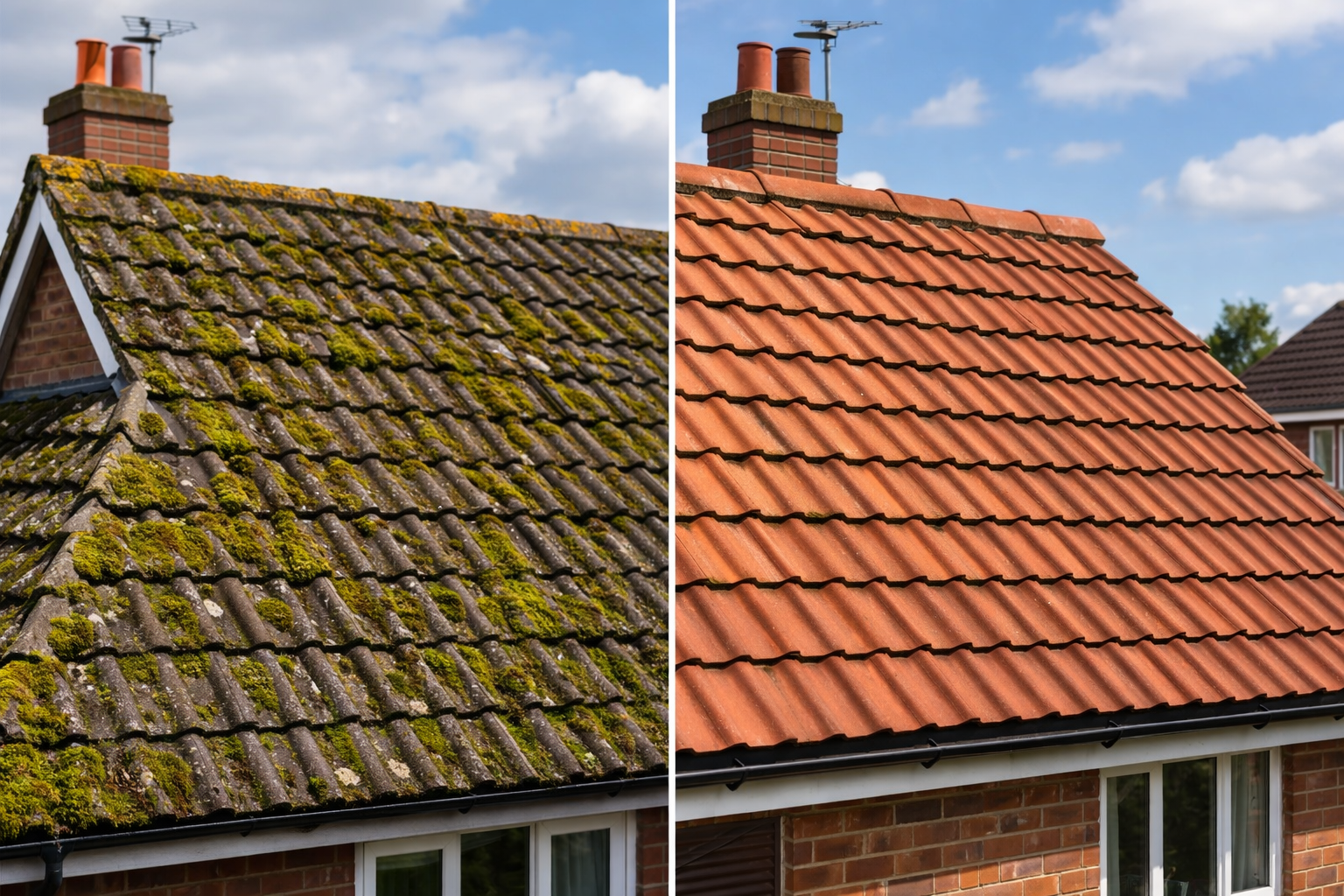
Moss grows particularly well in damp environments, which makes the UK climate ideal for its development. Frequent rainfall, moderate temperatures and long periods of shade encourage moss to establish itself on roof tiles and slate surfaces. Once established, moss retains moisture against the roof surface. That trapped moisture can accelerate deterioration of roofing materials and contribute to blocked gutters when clumps break away.
Moss can also lift tiles slightly as it expands, allowing rainwater to penetrate underneath roofing materials. Over time, this can lead to water damage, rot or leaks inside the property—especially if the roof already has weak spots, cracked tiles, or compromised flashing.
Risks of Removing Moss at the Wrong Time
Removing moss at the wrong time of year can create safety risks and reduce the effectiveness of treatments. Wet roofs become extremely slippery and difficult to work on safely. Cold temperatures can also reduce the effectiveness of many moss treatments because they work best in milder conditions.
That is why choosing the best time of year to remove moss from roof areas matters so much. Good timing improves safety, gives treatments a better chance to work properly, and helps reduce regrowth.
Best Season for Roof Moss Removal in the UK
In short: Spring and early autumn are usually best because conditions are safer, roofs dry more reliably, and treatments tend to perform better.
| Season | Suitability | Explanation |
|---|---|---|
| Spring | Excellent | Mild temperatures and improving weather make spring ideal for moss removal. Treatments applied during spring help prevent moss regrowth during wetter months. |
| Summer | Good (weather dependent) | Dry conditions can allow safe moss removal, although extreme heat may reduce treatment effectiveness and make roof work less comfortable. |
| Early Autumn | Excellent | Early autumn offers stable temperatures and enough daylight for safe work. Moss treatments applied at this time can keep working as winter approaches. |
| Late Autumn | Fair | Increasing rainfall and fallen leaves can make moss removal less effective and more hazardous, although work may still be possible during dry spells. |
| Winter | Not recommended | Cold temperatures, frost and short daylight hours make roof work dangerous and reduce treatment performance. |
For most homeowners searching for the best time of year to remove moss from roof surfaces, spring and early autumn offer the most practical balance between safety, treatment performance and weather reliability.
Best Months for Roof Moss Removal in the UK
The table below summarises the best months for roof moss removal in the UK based on weather conditions, safety, and treatment effectiveness.
| Months | Typical Conditions | Suitability |
|---|---|---|
| March – May | Mild temperatures and improving weather after winter. | Ideal conditions for moss removal and roof treatments. |
| June – August | Drier weather is more common, but high heat can reduce treatment performance. | Good during dry spells (avoid extreme heat days). |
| September – October | Stable temperatures before winter rain and frost. | Excellent time for roof moss removal. |
| November – February | Frequent rain, frost, ice and shorter daylight hours. | Usually not recommended. |
How UK Weather Affects Moss Removal
Rainfall and Moisture
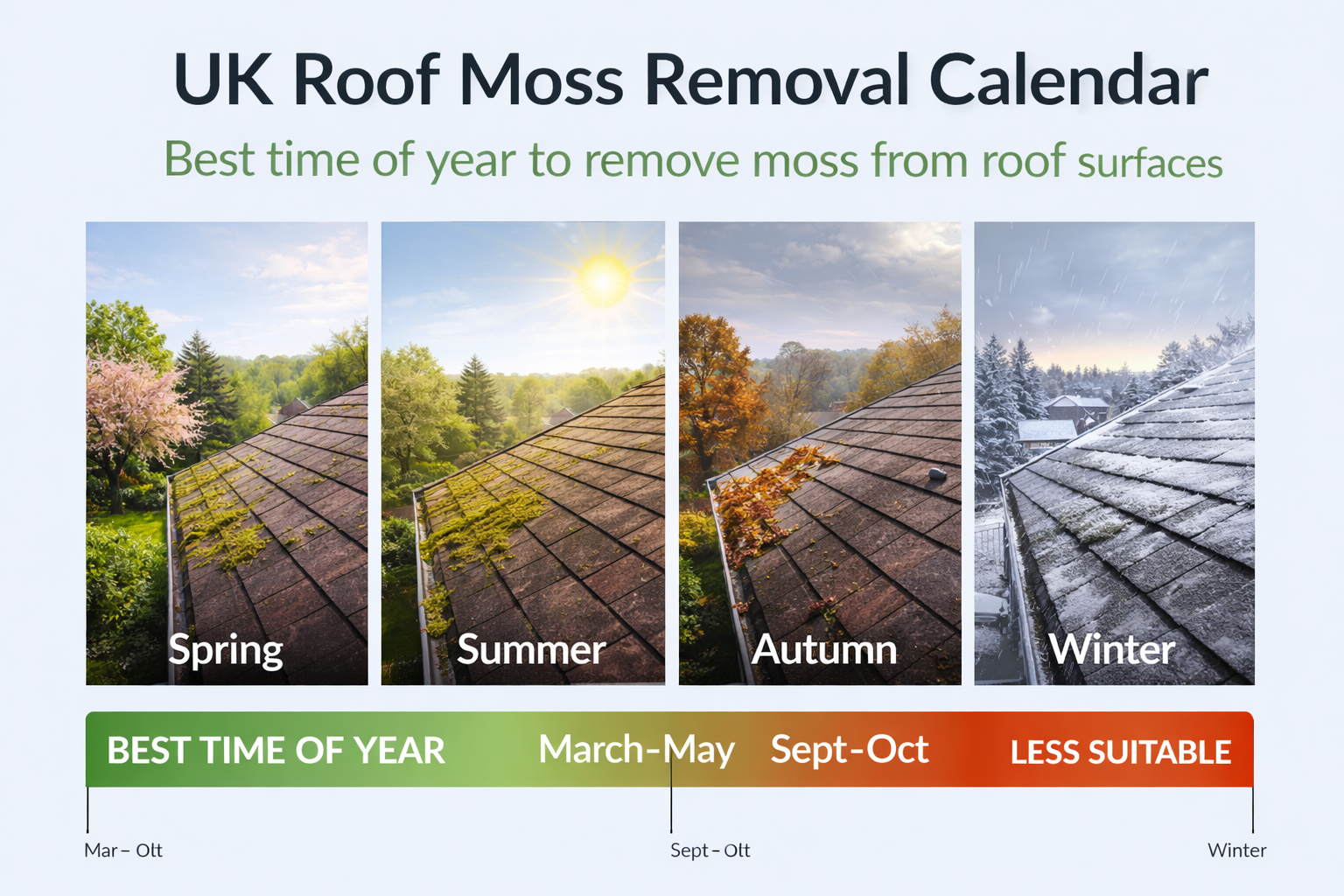
The UK experiences frequent rainfall throughout the year, particularly in autumn and winter. Moisture encourages moss growth and creates slippery roof surfaces, which makes removal dangerous. Moss removal should ideally take place during periods when the roof surface has time to dry. A dry roof improves traction and helps post-treatment products settle and activate as intended.
Regions such as Scotland, Wales and Northern England often experience higher rainfall levels than southern parts of the UK, which means moss growth can occur more quickly in these areas. Even within the same region, properties near woodland, rivers, or shaded valleys may see faster regrowth than more open, sun-exposed sites.
Frost and Ice
During winter months, frost and ice form regularly on roof surfaces. These conditions create serious safety hazards for anyone attempting roof cleaning. Many moss treatments work best in temperatures above freezing, meaning winter treatments can be less effective, take longer to work, or fail to dry properly.
Daylight Hours
Short winter days limit safe working hours on rooftops and can reduce visibility for spotting tile damage, ridge issues, or fragile roof areas. Spring and early autumn provide longer daylight periods that allow safer inspection, cleaning and treatment of roof surfaces.

How Quickly Does Moss Grow on Roofs?
Moss growth on roofs usually develops gradually over several seasons rather than appearing overnight. In damp UK climates, moss spores can begin establishing within months, particularly on shaded roof slopes or areas where leaves and debris collect. Once small patches appear, they can expand steadily each year if conditions remain wet and shaded.
In many cases, moss growth follows a predictable pattern:
- Year 1: small patches begin forming between tiles, especially on shaded sections
- Year 2: moss spreads across the roof slope and starts retaining more moisture
- Year 3: thicker clusters trap debris and can start affecting drainage
- Year 4+: tile wear, blocked gutters and water penetration risks increase
This is why regular inspections and seasonal maintenance are so valuable. Catching moss early can reduce the need for more intensive cleaning later.
Common Mistakes When Removing Roof Moss
Removing moss incorrectly can damage roofing materials or cause moss to regrow quickly. Some of the most common mistakes homeowners make include using high pressure washing that damages tiles, attempting removal during wet or icy weather, failing to clear gutters after cleaning, and skipping a preventative treatment.
High pressure washing is a frequent cause of problems because it can strip protective surfaces from tiles, force water beneath roofing materials, and create costly repairs. For most roofs, gentler methods and suitable treatments are safer and more effective.
Environmental Factors That Encourage Roof Moss
Several environmental conditions increase the likelihood of moss developing on a roof. These include local climate, nearby vegetation, roof orientation and airflow around the property. Roofs facing north or shaded by trees often remain damp for longer periods, which gives moss more opportunity to establish and spread.
In regions with higher rainfall or coastal humidity, moss can develop more quickly than in sunnier or drier locations. Understanding these factors helps homeowners plan roof maintenance and determine how often moss removal may be required.
What Causes Moss to Grow on Roofs in the UK?
Moss growth is usually the result of a few conditions coming together: moisture, shade, and organic debris. The UK climate provides moisture for much of the year, while many homes have shaded roof sections due to nearby trees or neighbouring buildings. Add leaf litter and airborne spores, and moss can establish quickly—especially in cooler, damper months.
Common causes of roof moss in the UK include:
- Regular rainfall and persistently damp conditions
- Shaded roof slopes, especially north-facing sections with limited sun
- Overhanging branches dropping organic debris that holds moisture
- Blocked or overflowing gutters causing water to sit near tile edges
- Older, more porous tiles that retain moisture longer
Signs Your Roof Needs Moss Removal
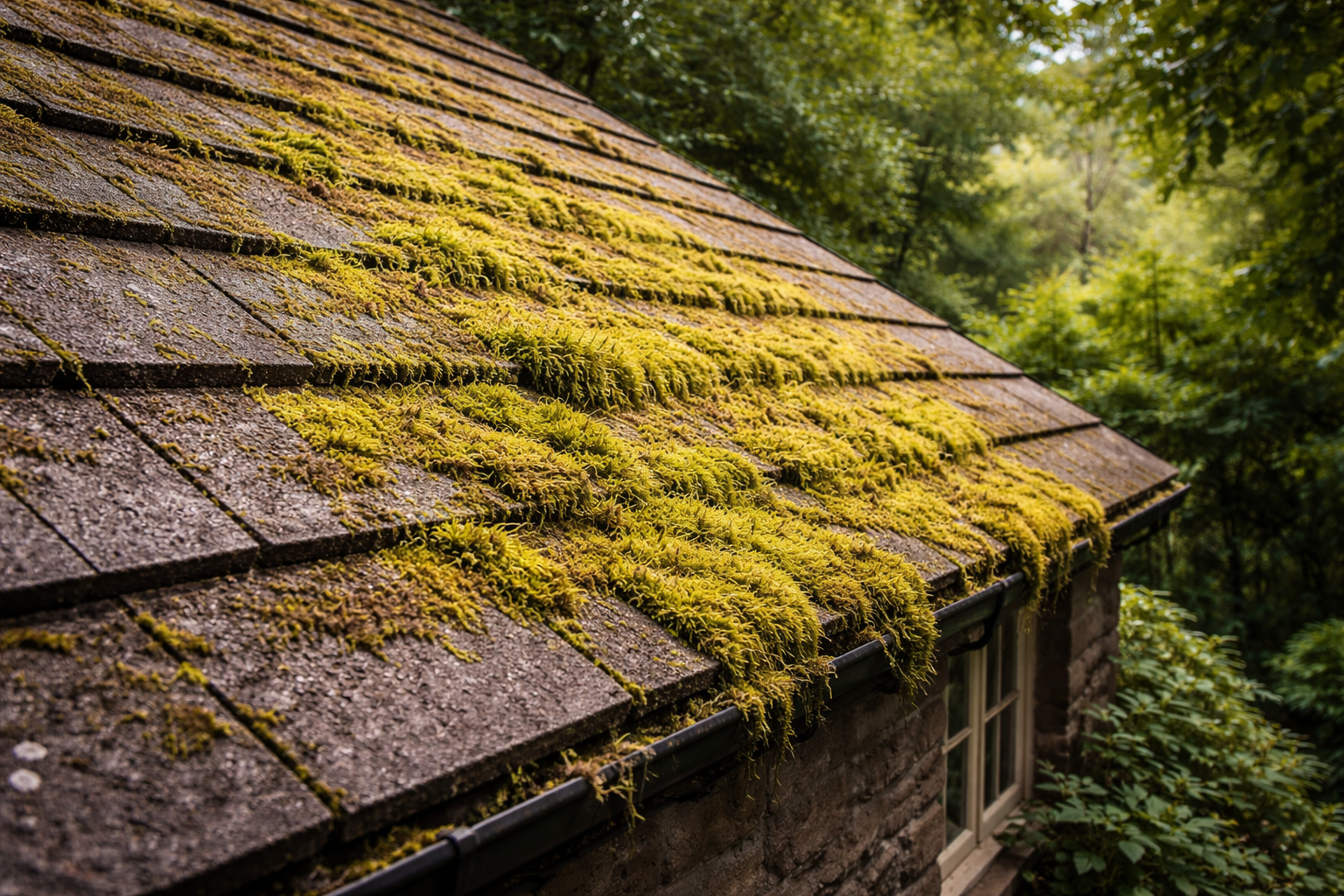
Some homeowners only notice moss once it becomes obvious from the ground, but there are earlier warning signs that indicate it may already be affecting the roof and drainage system. Catching moss early typically makes removal easier and reduces the risk of tile damage.
- Green patches forming between tiles or along ridge lines
- Small clumps appearing around roof valleys or chimneys
- Moss debris collecting in gutters or downpipes
- Roof sections staying damp long after rainfall ends
- Slow drainage during heavy rain
Does Roof Moss Damage Roof Tiles?
Many homeowners wonder “is moss on a roof bad?” While moss may look harmless at first, it can retain moisture and gradually damage roofing materials over time. Moss keeps tiles damp for longer, increasing wear and raising the risk of cracking—especially through freeze-thaw cycles where moisture expands as it freezes.
Roof moss can contribute to problems such as:
- Cracked, weakened, or eroded tiles
- Water penetration beneath tiles where moss has lifted edges
- Blocked gutters and drainage systems leading to overflow and damp walls
- Increased likelihood of leaks, particularly around flashing, valleys and ridges
Summer vs Winter Moss Removal
Summer roof moss removal is possible when weather conditions remain dry for extended periods. However, extremely hot temperatures can reduce the effectiveness of some moss treatments and may cause them to dry too quickly. Winter moss removal is generally discouraged due to wet surfaces, frost, ice and reduced daylight.
Because of these factors, most professional roof cleaners recommend scheduling moss removal during spring or early autumn whenever possible.
How Often Should Moss Be Removed from a Roof in the UK?
The frequency of moss removal depends on environmental factors around your property and the characteristics of the roof itself. Roofs located near trees often develop moss more quickly because shade and fallen leaves retain moisture. Roofs in higher rainfall areas often require more frequent maintenance.
In most cases, UK homeowners benefit from moss removal every two to four years. Regular roof inspections can help identify moss growth early—before it causes structural damage, gutter blockages or drainage issues.
How to Prevent Moss From Growing Back on Your Roof
Moss can return over time, especially in damp, shaded areas, but there are practical steps that can slow regrowth and extend the time between cleanings.
If you are wondering how to stop moss growing on roof tiles, focus on reducing moisture retention and improving drainage and sunlight exposure where possible:
- Keep gutters clear: Clean gutters and downpipes so water drains quickly and doesn’t overflow onto tiles.
- Reduce shade: Trim overhanging branches to improve airflow and sunlight on the roof.
- Remove debris: Clear leaves and organic material that hold moisture on roof surfaces and in valleys.
- Use an appropriate after-treatment: A suitable post-cleaning treatment can help slow moss regrowth, particularly on shaded slopes.
Roof Types Most Affected by Moss in the UK
While moss can grow on many roof types, some materials are more prone because they retain moisture in surface textures or small pores. In the UK, moss is commonly seen on clay tiles, concrete tiles and slate roofs. Whatever the material, the biggest risk factors remain moisture, shade and poor drainage.
Regional Moss Growth Differences Across the UK
Moss growth can vary depending on where your property is located. Areas with higher rainfall and cooler temperatures often experience faster moss growth and more persistent dampness on roof surfaces.
- Scotland and Northern England: Often see heavier rainfall and more frequent moss growth, especially on shaded roofs.
- Wales: Damp coastal weather and woodland areas can encourage moss development.
- Southern England: May experience slower growth in sunnier areas, but shaded sections can still develop moss quickly.
DIY vs Professional Roof Moss Removal
Some homeowners choose to remove moss themselves using brushes or roof treatments. DIY removal may be suitable for small areas when carried out safely and during appropriate weather conditions. If you are considering DIY, avoid working on wet or icy roofs, and make sure debris is cleared from gutters afterwards.
Roof moss removal safety should always be a priority. Wet tiles, steep roof angles and unstable ladders can create serious risks, which is why many homeowners choose professional cleaning services for anything beyond a small, easily accessible section.
Professional roof cleaning services use specialised equipment and treatments designed to remove moss safely while protecting the roof structure. They can also spot issues you might miss—such as cracked tiles or failing flashing—before they become leaks.
Our professional roof moss removal services provide safe and effective treatment tailored to your roof type and local weather conditions.
Frequently Asked Questions
Best Time of Year to Remove Moss From Roof FAQs
Quick answers to common questions about the best time of year to remove moss from roof surfaces in the UK.
Conclusion
The best time of year to remove moss from roof surfaces in the UK is typically spring or early autumn, when conditions are milder and drier. Removing moss at the right time improves safety, increases treatment effectiveness and helps protect roofing materials from long-term moisture damage.
Regular inspections, clear gutters and simple preventative steps can slow moss regrowth and reduce how often you need a full clean.
Author & Experience
This guide was written by experienced UK roof cleaning specialists with practical experience working on tiled and slate roofs across England, Wales and Scotland. All advice is based on real-world roof cleaning work combined with knowledge of UK weather conditions and seasonal maintenance practices.