
UK Roof Cleaning Network • Real Cleaning Results
Roof Cleaning Before & After Results
These real project examples show how professional roof moss removal, steam cleaning and specialist treatments can improve roofs across the UK. While every property is different, these visual comparisons give homeowners a realistic idea of what a professional clean can achieve.
Moss, algae and surface staining can make roof tiles look heavily aged. Professional cleaning removes biological growth safely while helping restore a cleaner and more even appearance.
The image below shows a typical transformation after professional moss removal and surface treatment.
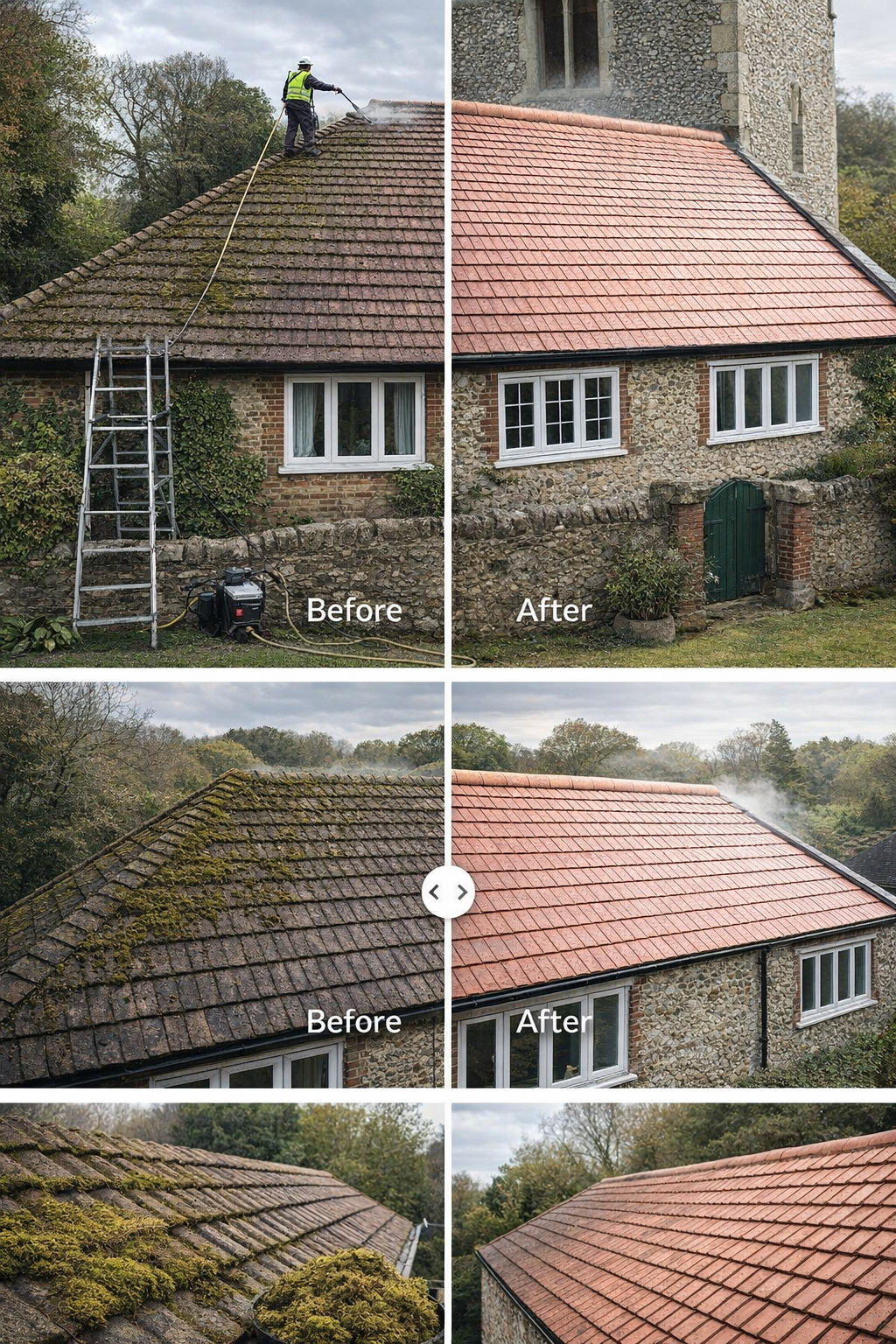
Why homeowners search for roof cleaning results
Many people want to see visual proof before booking exterior maintenance work. That is why comparison images are so useful. They show the sort of difference that can be achieved when moss, algae, lichen and debris are removed from roof tiles using the right method.
In the UK, damp weather and shaded roof slopes often allow biological growth to build up slowly over time. This can leave concrete, clay and slate roofs looking discoloured, green or patchy. In more severe cases, moss can also break away and collect in guttering.
Visual examples also help homeowners understand that not every roof needs the same process. A property with thick moss may need manual roof moss removal, while another with lighter staining may be better suited to low-pressure steam cleaning or biocide treatment for regrowth control.
The aim of these examples is to show realistic outcomes rather than exaggerated promises. Professional cleaning is usually about safe improvement, better drainage and reduced biological growth rather than making every roof look brand new.
Why roofs develop moss, algae and surface staining
Roofs across the UK commonly develop moss, algae and staining because frequent rainfall and cool temperatures create ideal growing conditions. Areas beneath trees and north-facing slopes are often affected most because they stay damp for longer after rain.
Once moss becomes established, it can spread between tiles, trap moisture and gradually release debris into gutters and downpipes. Algae and lichen can also leave dark or patchy marks on the roof surface, even where moss is not especially thick.
This is one reason many homeowners compare visual results before choosing a service. A well-planned clean can improve the roof’s appearance, reduce debris buildup and help restore more even water runoff.
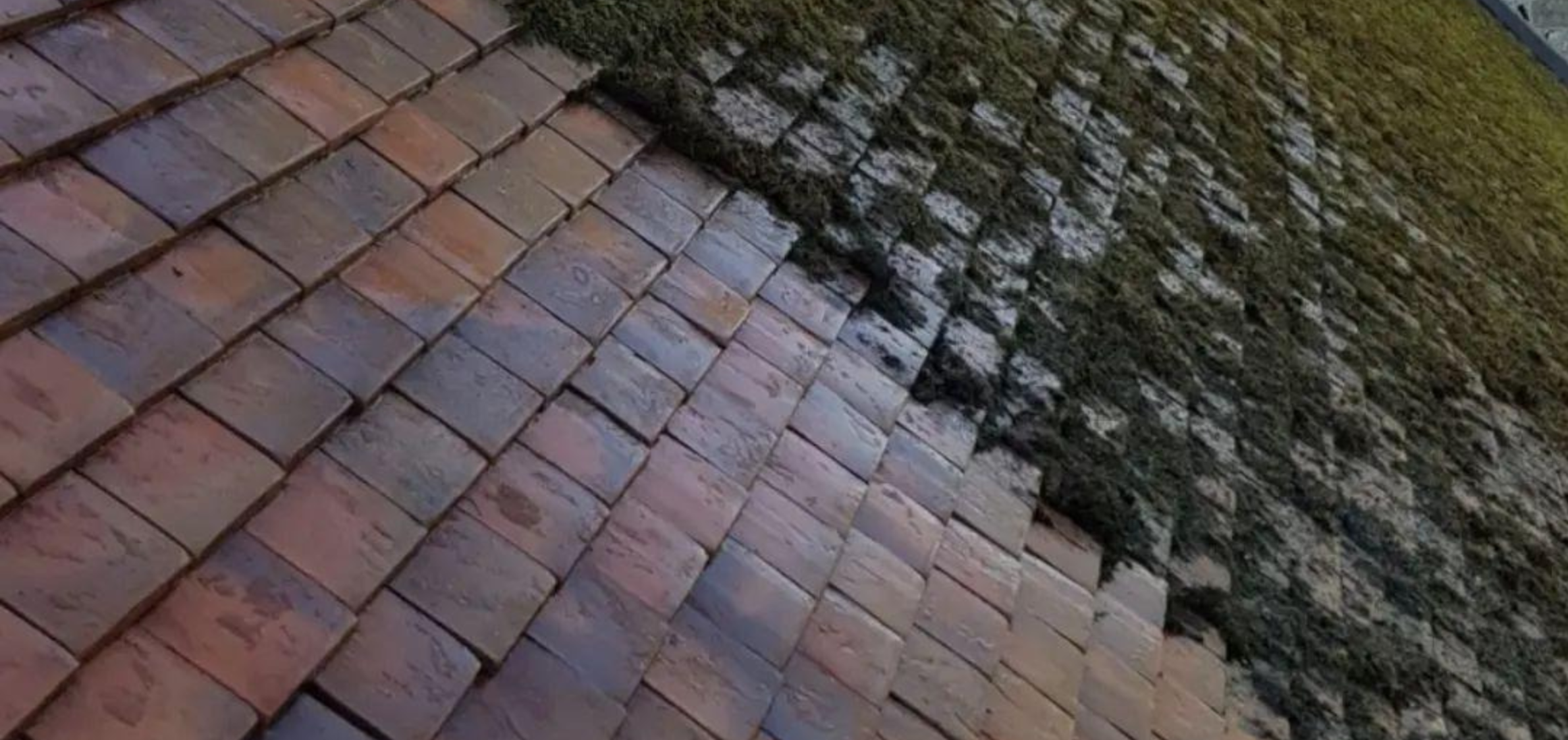
What happens during a professional roof clean?
Most projects begin with an assessment of the roof material, access conditions and severity of growth. The safest method depends on whether the roof is heavily covered in moss, lightly stained by algae or affected by both.
Where moss is thick, contractors often begin with manual scraping using tools shaped to match the tile profile. This removes the bulk of the buildup before any further treatment is applied. In other cases, soft washing or steam cleaning may be used to clean the surface more fully.
After the visible moss has been removed, a follow-up treatment is often applied to target remaining spores and slow future regrowth. The final appearance can continue improving over time as loosened organic residue breaks down and washes away naturally.
Professional cleaning is designed to improve the roof safely, not just quickly. That is why the method chosen matters as much as the end result.
Before vs after: what usually changes after professional roof cleaning?
This side-by-side summary helps explain the most common differences homeowners notice once moss, algae and debris have been professionally removed.
Before Cleaning
- Visible moss growing between roof tiles
- Dark algae staining or patchy discolouration
- Debris collecting in gutters and valleys
- Roof surface looks damp, uneven or neglected
- Water runoff may be reduced by moss buildup
After Cleaning
- Moss removed from the tile surface
- Cleaner and more even roof appearance
- Reduced debris buildup in gutters
- Tile profile becomes more visible again
- Roof looks better maintained overall
The exact outcome depends on tile type, roof age, moss severity and the cleaning method used. Some older roofs will still show natural weathering after cleaning, but the difference in appearance and drainage is often substantial.
What affects the final result?
Not every roof transformation looks the same. The end result depends on roof material, how severe the biological growth is, how long staining has been present and which cleaning method is used.
Concrete roof tiles often show strong visual improvement because moss can build up heavily on their surface over time. Clay tiles may show more subtle changes where algae staining is the main issue rather than dense moss. Slate roofs can also improve significantly, although gentler cleaning methods are often preferred to protect the material.
Tree coverage is another major factor. Roofs beneath overhanging branches usually stay damp for longer after rain, which allows moss and algae to return more quickly. In these cases, biocide treatment is often used after cleaning to help the result last longer.
The age of the roof matters too. Older roofs may still show some weathering after cleaning even when moss and biological growth have been removed successfully. This is normal and is one reason professional contractors focus on safe restoration rather than unrealistic cosmetic claims.
Real roof transformation examples
Use these example layouts to showcase different roof types, cleaning methods and levels of moss growth.
Concrete Tile Moss Removal
Heavy moss buildup removed from concrete roof tiles using manual scraping followed by biocide treatment.
Steam Cleaning Result
Low-pressure steam cleaning reduced algae staining and light moss while helping protect the tile surface.
Semi-Detached Roof Moss Removal
Moss removed from shaded roof slopes where nearby trees had created persistent damp conditions.
Roof and Gutter Cleaning
Roof moss removal combined with gutter clearing to restore proper drainage and remove accumulated debris.
Detached House Roof Cleaning
Large detached roof cleaned to remove thick moss growth that had accumulated over many years.
Biocide Treatment Result
Biocide applied after moss removal to slow regrowth and help maintain a cleaner roof surface.
Clay Tile Roof Cleaning
Gentle cleaning removed organic staining from clay tiles without using aggressive pressure.
Garage Roof Moss Removal
Significant moss buildup cleared from a garage roof to improve drainage and overall appearance.
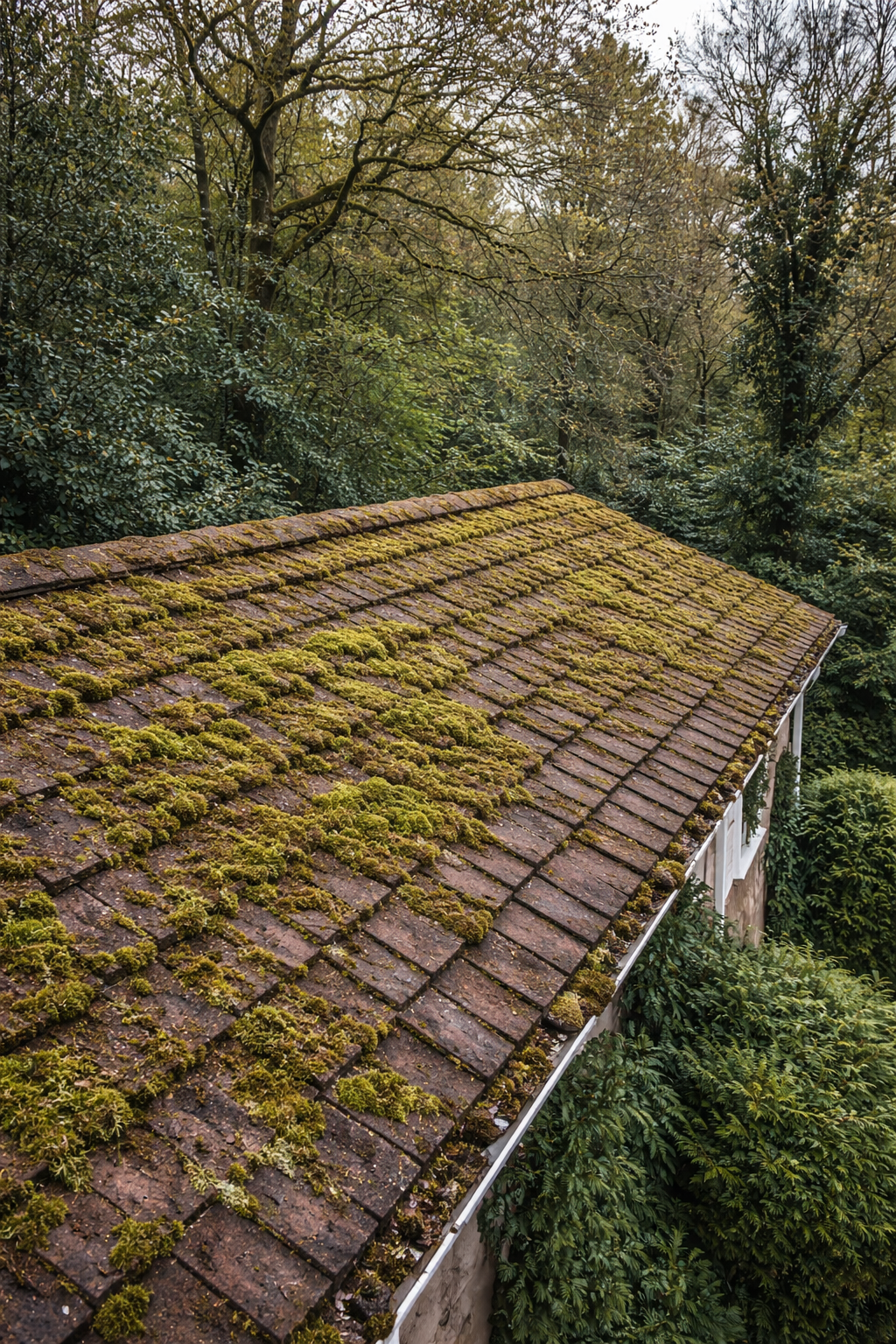
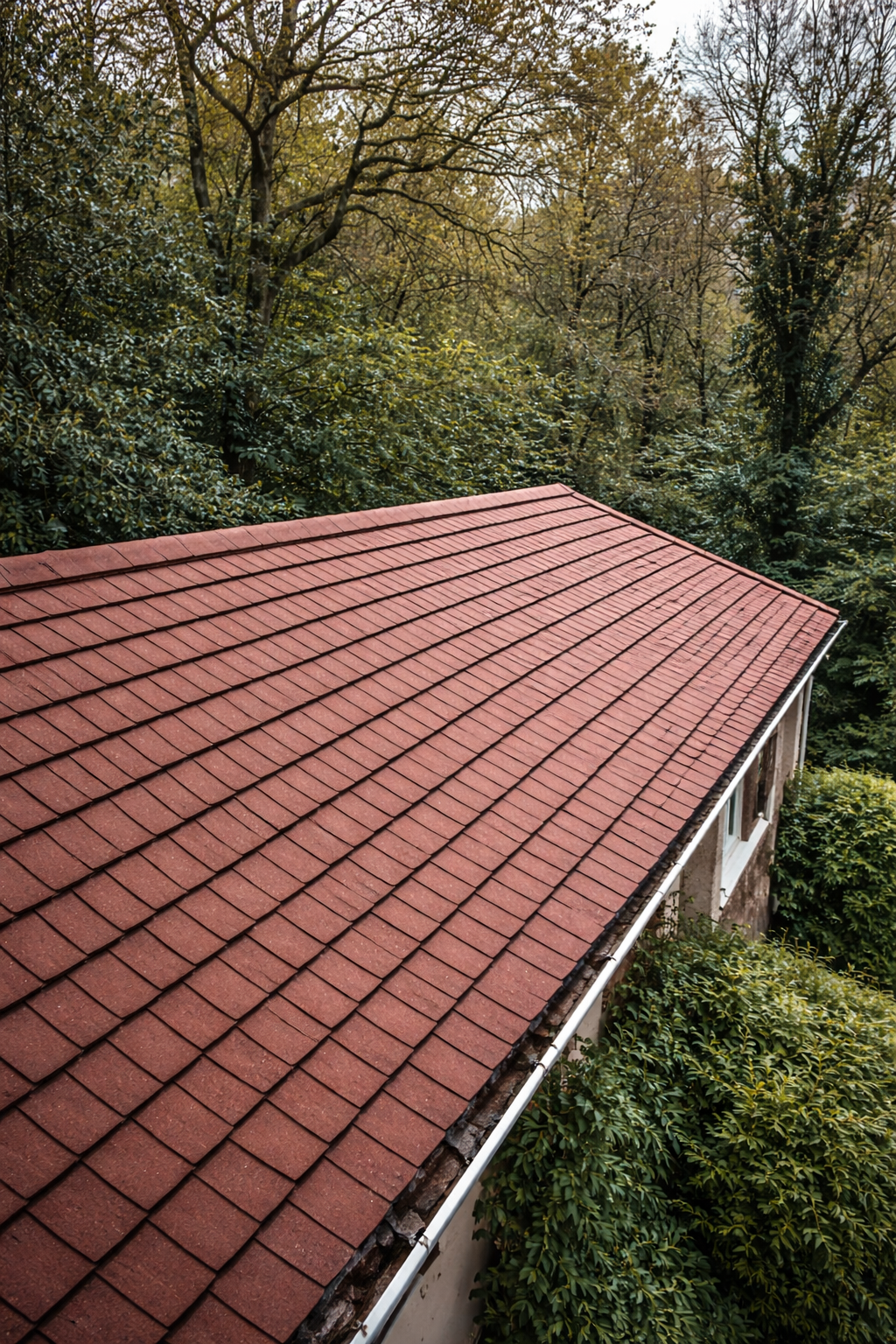
Tree-Covered Roof Cleaning
Moss growth caused by nearby trees removed and treated to reduce the risk of rapid regrowth.
Full Roof Surface Cleaning
A combination of moss removal and low-pressure cleaning restored the roof’s appearance safely.
Common questions homeowners ask when comparing results
One of the most common questions is whether professional cleaning really makes a visible difference. In many cases, yes. Removing moss, algae and organic staining can change the look of a roof significantly, especially where buildup has developed over a long period.
Another common question is whether roof and gutter cleaning should be done together. Often the answer is yes. Moss removal can release debris into the gutter system, so combining both services helps restore drainage and completes the overall maintenance process.
Homeowners also ask how long results will last. That depends on the environment, nearby trees, roof orientation and whether a treatment has been applied to slow regrowth. Roofs in damp shaded areas usually need maintenance more often than roofs with better sunlight exposure.
If you are comparing methods, our guides to safe moss removal options, steam cleaning for delicate roofs and post-clean biocide treatments explain how different approaches affect the outcome.
What results should homeowners realistically expect?
The final appearance depends on tile material, moss severity and how long biological growth has been present. Visual examples can look dramatic, but the exact result always depends on the roof’s starting condition.
Older roofs may retain some weathering even after cleaning, particularly where tiles have aged over decades. This is normal. Professional work focuses on removing moss and biological buildup safely rather than making an older roof appear completely new.
For many homeowners, the most important benefits are improved appearance, reduced moss growth, clearer gutters and less debris accumulation. These practical results are often just as valuable as the visual difference shown in comparison images.
If you are considering maintenance, our guides to professional roof cleaning methods and typical UK price ranges can help explain the options available.
FAQs
Thinking about cleaning your roof?
Compare quotes from trusted local specialists and find out which cleaning method is most suitable for your property.