National Roof Cleaning Guidance • UK Specialists
Biocide Roof Cleaning in the UK — How It Works
Biocide roof cleaning is a treatment-based method used to control moss, algae and lichen growth on roof tiles. Instead of relying on aggressive pressure washing, this approach uses specialist cleaning solutions that kill biological growth at its source and help slow regrowth across the roof surface.
Biocide treatments are commonly used after manual moss removal or as part of a wider roof cleaning process designed to maintain roof tiles safely in the UK climate.
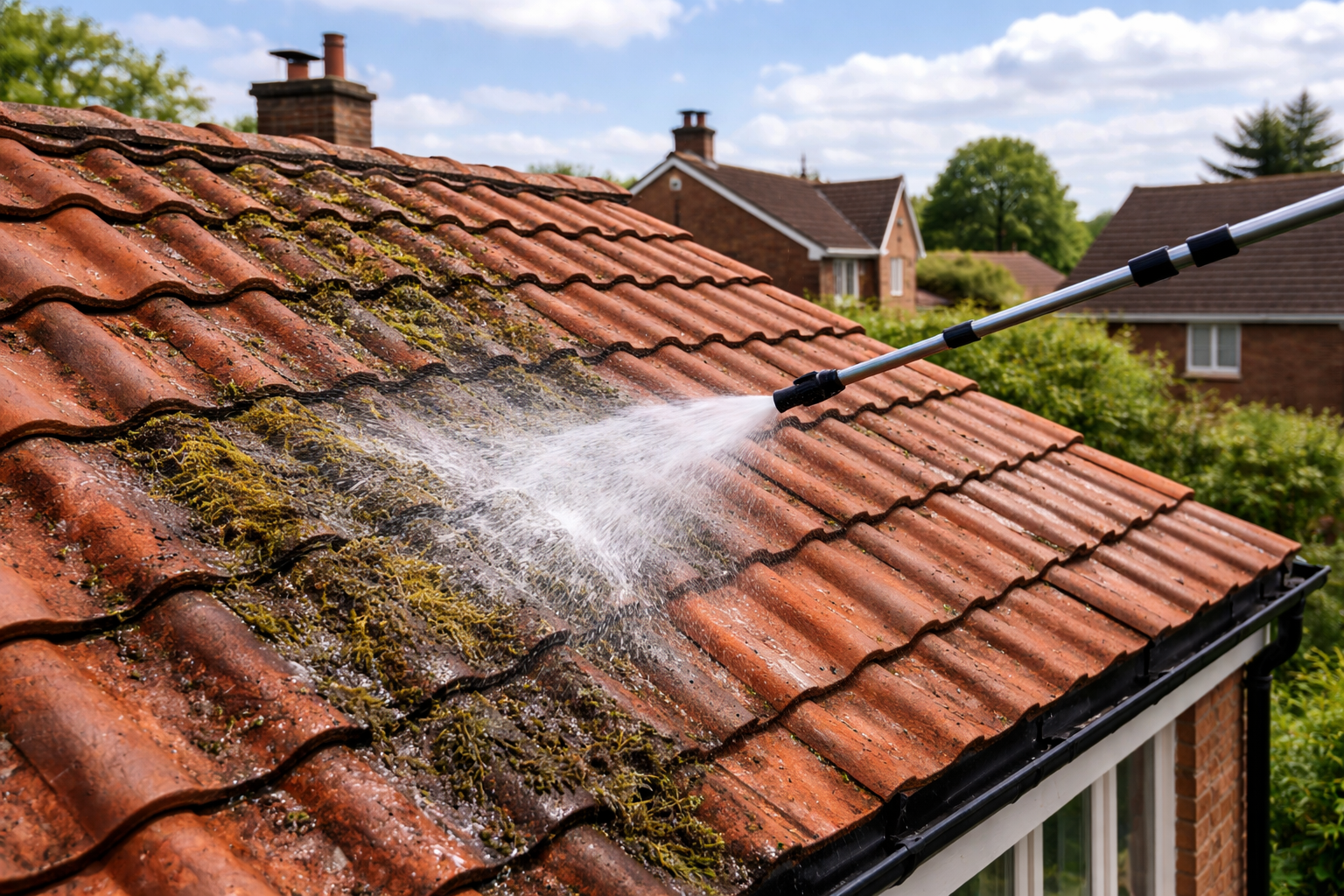
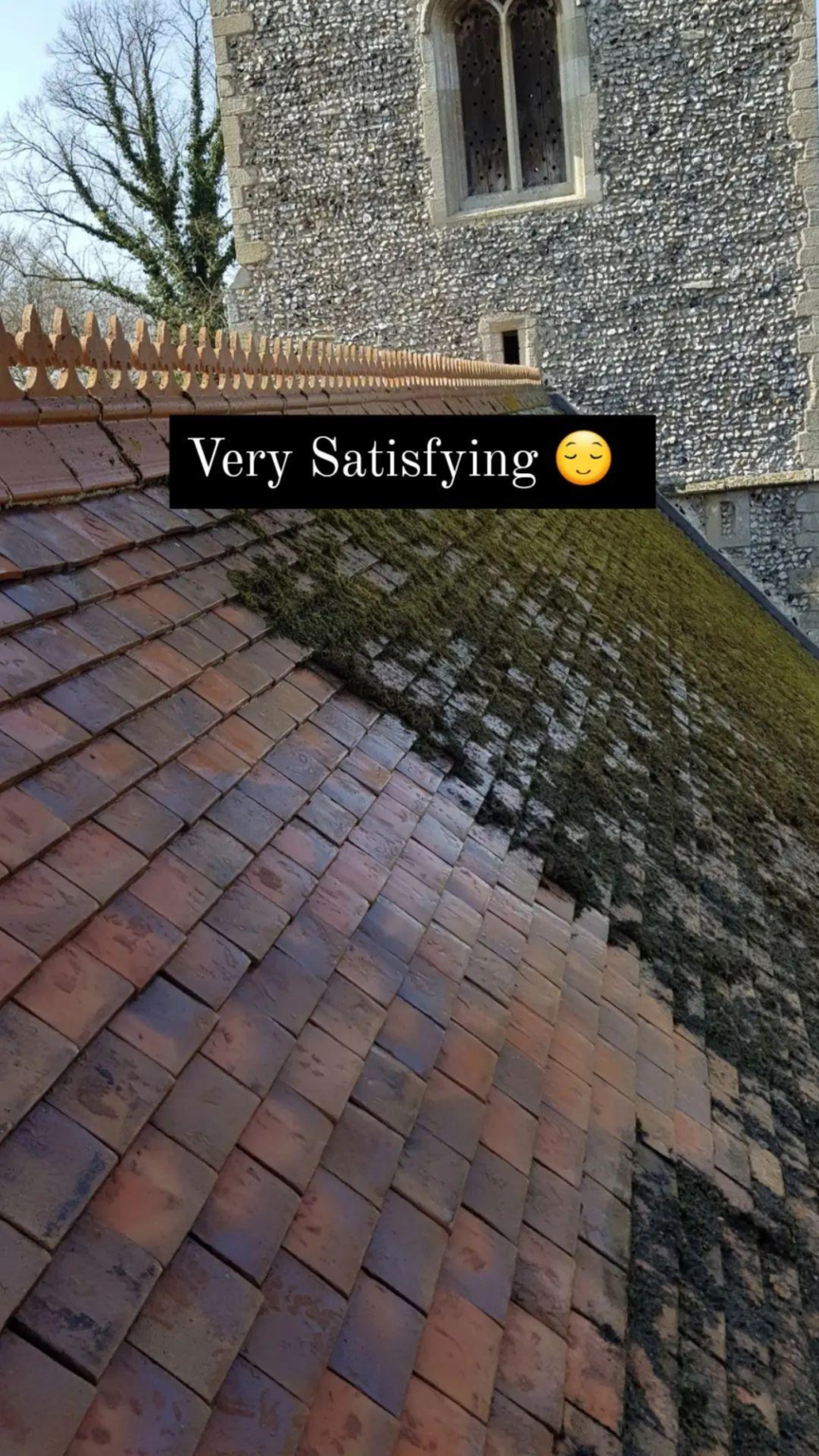
The image below shows how roof tiles can gradually improve after biocide treatment.
What Is Biocide Roof Cleaning?
Biocide roof cleaning involves applying a specialist treatment that kills moss, algae and lichen organisms on roof surfaces. The treatment works at a microscopic level, targeting the biological spores responsible for regrowth.
Unlike high pressure washing, which removes growth mainly through force, biocide treatments work gradually. After application, dead moss and algae break down naturally and weather away over time.
Because of this slower process, the roof often continues to improve in appearance during the weeks following treatment.
Biocide cleaning is commonly used alongside manual moss removal or soft wash roof cleaning techniques. Together these methods form one of the most widely recommended approaches for maintaining roof tiles in damp climates like the UK.
Why Moss and Algae Return So Quickly on Roofs
Moss spreads through microscopic spores that travel through the air. These spores settle in tiny gaps between roof tiles where moisture collects.
Because the UK experiences regular rainfall and cool temperatures, roofs frequently remain damp for long periods after rain. These conditions allow moss spores to develop into new growth relatively quickly.
Roofs beneath trees or facing north often experience the fastest regrowth because they receive less sunlight and remain damp longer.
Biocide treatment helps interrupt this cycle by targeting the spores left behind after cleaning. While it does not permanently prevent moss from returning, it can significantly slow how quickly new growth appears.
How Biocide Roof Treatments Work
Biocide treatments are usually applied after the main moss buildup has been removed. This allows the treatment to reach the roof surface more effectively.
Once applied, the treatment spreads across the tile surface and begins targeting microscopic biological growth. The process does not rely on immediate visible cleaning but instead works gradually over time.
Rainfall and natural weathering then wash away the dead moss and algae residue over the following weeks or months.
Because of this gradual effect, biocide roof cleaning is often considered one of the gentlest methods of roof maintenance.
Biocide Roof Cleaning vs Other Roof Cleaning Methods
Biocide treatment is often combined with other roof cleaning techniques depending on the roof condition.
Biocide Treatment After Moss Removal
Many roof cleaning projects begin with manual moss removal. This removes thick moss buildup before treatment is applied.
After scraping the bulk growth from the roof surface, a biocide treatment is sprayed across the tiles to kill remaining spores and slow future moss development.
Biocide Roof Cleaning and Soft Washing
Soft wash roof cleaning combines gentle surface cleaning with a biocide treatment. Instead of blasting debris away with pressure, the roof is cleaned using low-pressure water and treatment solutions.
This approach is often used on residential roofs where preserving the condition of tiles is important.
Explore roof cleaning methods →Biocide vs Pressure Washing
Pressure washing relies on force to remove moss and debris quickly. However, excessive pressure can sometimes damage tile surfaces or disturb mortar.
Biocide cleaning focuses instead on killing biological growth and allowing weathering to remove the residue naturally over time.
How Roof Type Affects Biocide Cleaning
Different roofing materials respond differently to cleaning treatments. Concrete tiles, clay tiles and slate roofs may all require slightly different cleaning approaches.
Concrete roof tiles are common across the UK and often develop moss because their surface gradually becomes more porous with age. Biocide treatment is frequently used after moss removal to slow regrowth.
Clay tiles are more resistant but may still develop algae staining or lichen growth. Low pressure cleaning combined with biocide treatment can help restore their appearance safely.
Slate roofs often require the most care. Aggressive cleaning methods may damage older slate tiles, which is why treatment-based cleaning approaches are commonly recommended.