
National Roof Cleaning Guidance • UK Specialists
Professional Roof Cleaning in the UK — Done Properly
Roof cleaning in the UK involves safely removing moss, algae and debris from roof tiles to protect drainage, improve appearance and extend roof lifespan. Whether using manual moss removal, steam roof cleaning or biocide treatment, the correct method depends on roof type, tile condition and moss growth levels.
We provide evidence-led guidance on safe roof moss removal methods and connect homeowners with trusted professionals across the UK.
The image below shows a typical example of roof cleaning before and after moss removal on UK roof tiles.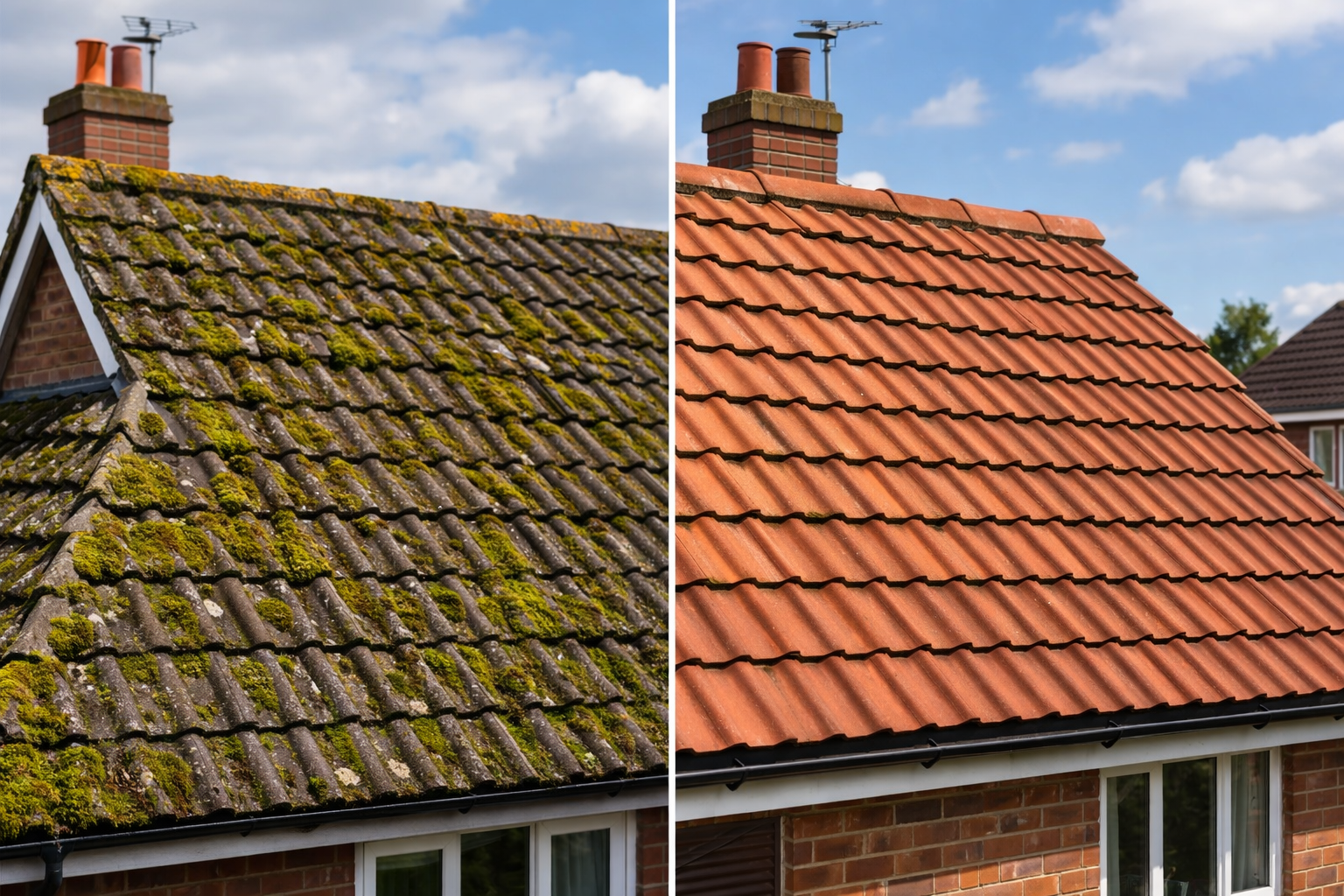
What is roof cleaning — and why does it matter?
Cleaning a roof removes moss, algae, lichen and debris from roof surfaces to improve drainage and maintain the condition of roof tiles. In the UK climate moss growth is extremely common due to regular rainfall and damp weather conditions.
Over time moss can retain moisture against roof tiles and contribute to blocked gutters or reduced water runoff. While this rarely causes immediate structural damage, heavy moss growth may accelerate tile wear and increase maintenance requirements.
Professional cleaning focuses on removing biological growth safely without damaging the roof surface itself. The correct method depends on tile condition, roof type and access requirements.
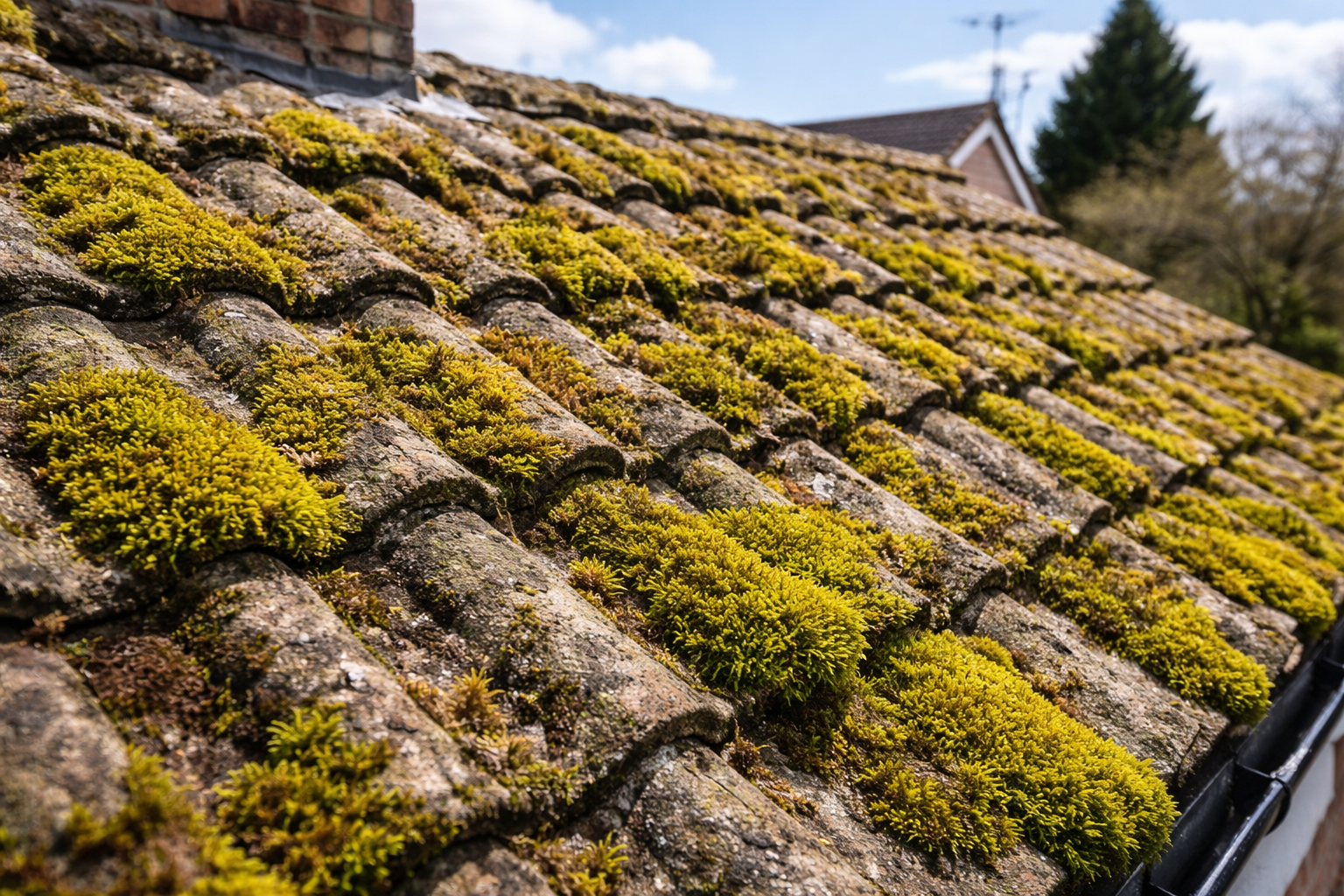
Moss commonly develops on roof tiles in the UK due to damp weather conditions and shaded roof areas.
Why do roofs develop moss?
Moss spreads through airborne spores and thrives in damp environments. The UK climate provides ideal conditions for moss growth, particularly on shaded roof slopes or areas beneath overhanging trees.
Older roof tiles are particularly prone to moss growth because their surface coating gradually weathers over time. Once moss establishes itself it spreads quickly across tile surfaces, forming thick patches that retain water and organic debris.
Regular roof maintenance and cleaning prevents excessive moss accumulation and helps maintain proper roof drainage. Removing moss early also reduces the likelihood of debris entering gutters and downpipes.
Safe Roof Tile Cleaning Methods Explained
Several techniques are used depending on tile type and moss growth levels.
Manual Moss Removal
Manual moss removal involves scraping moss from roof tiles using specialist tools designed to match the tile profile. This removes the bulk of moss growth before further treatment.
After moss removal contractors often apply a biocide treatment to kill remaining spores and slow regrowth.
Learn more about moss removal →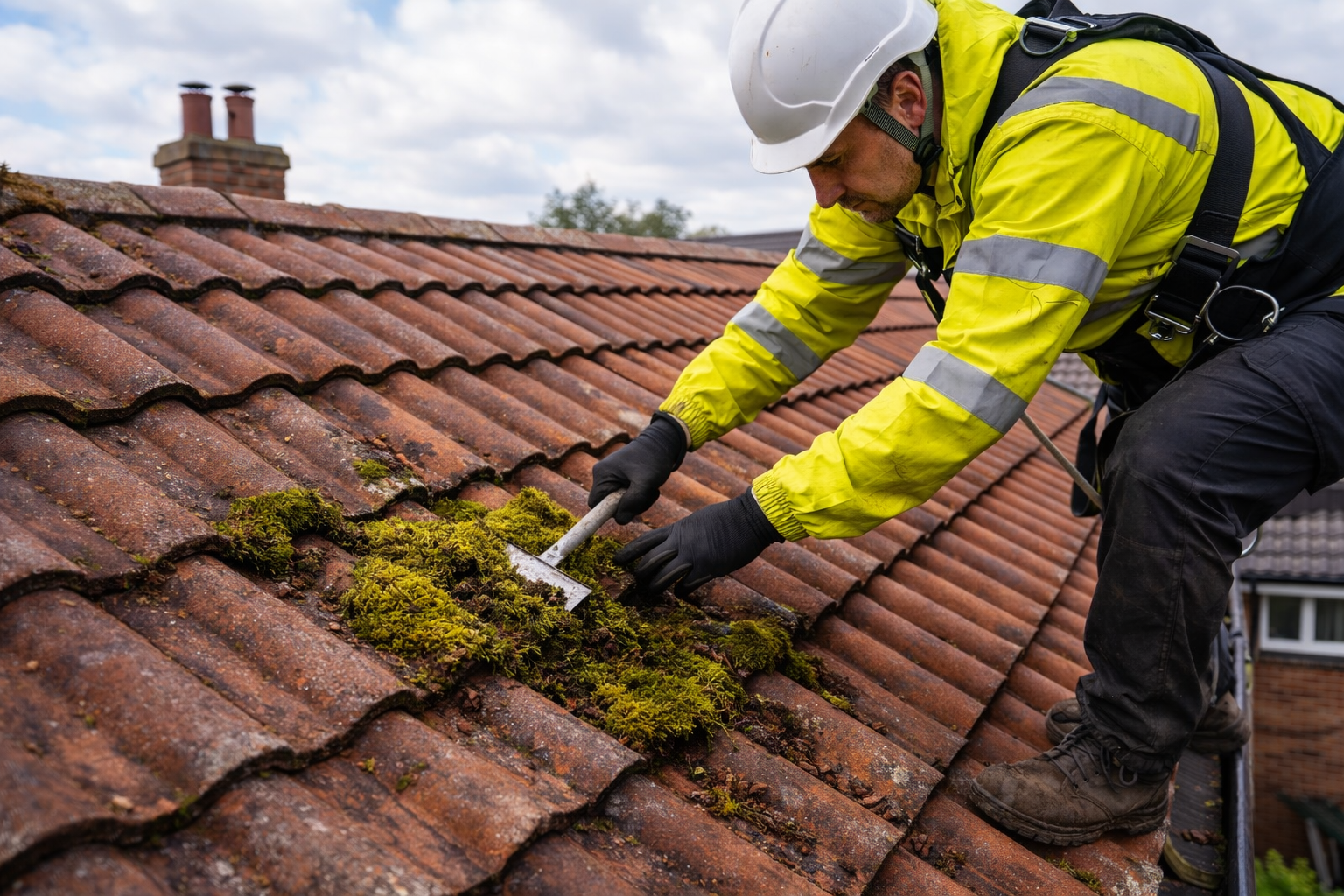
Steam Roof Cleaning
Steam cleaning uses heated water at low pressure to remove biological growth. Because the cleaning relies on heat rather than force, it can be safer for delicate tiles such as slate.
Steam cleaning is often used where preserving tile surfaces is particularly important.
Explore steam cleaning for roofs →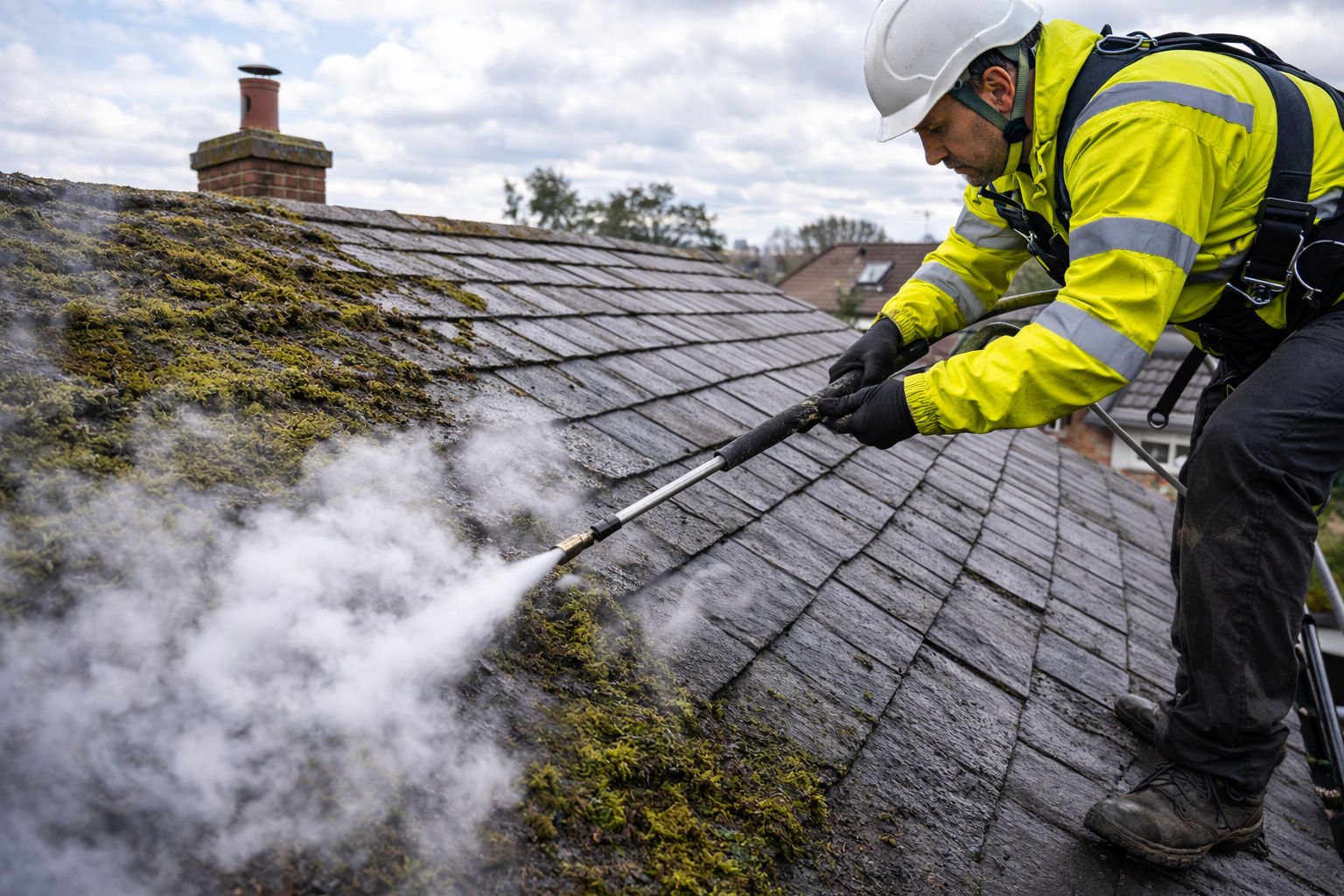
Soft Wash and Biocide Treatment
Soft washing involves applying specialist cleaning solutions that kill moss, algae and lichen spores. This treatment is usually applied after moss removal to slow regrowth.
Biocide treatments can help keep roofs clear for several years after cleaning.
Read about biocide roof treatment →Is pressure washing a roof safe?
High pressure washing can damage roof tiles if used incorrectly. Strong water pressure may remove protective coatings or force water beneath tiles.
For this reason many contractors prefer gentler techniques such as manual moss removal, steam cleaning or soft washing.
Cleaning for different roof types
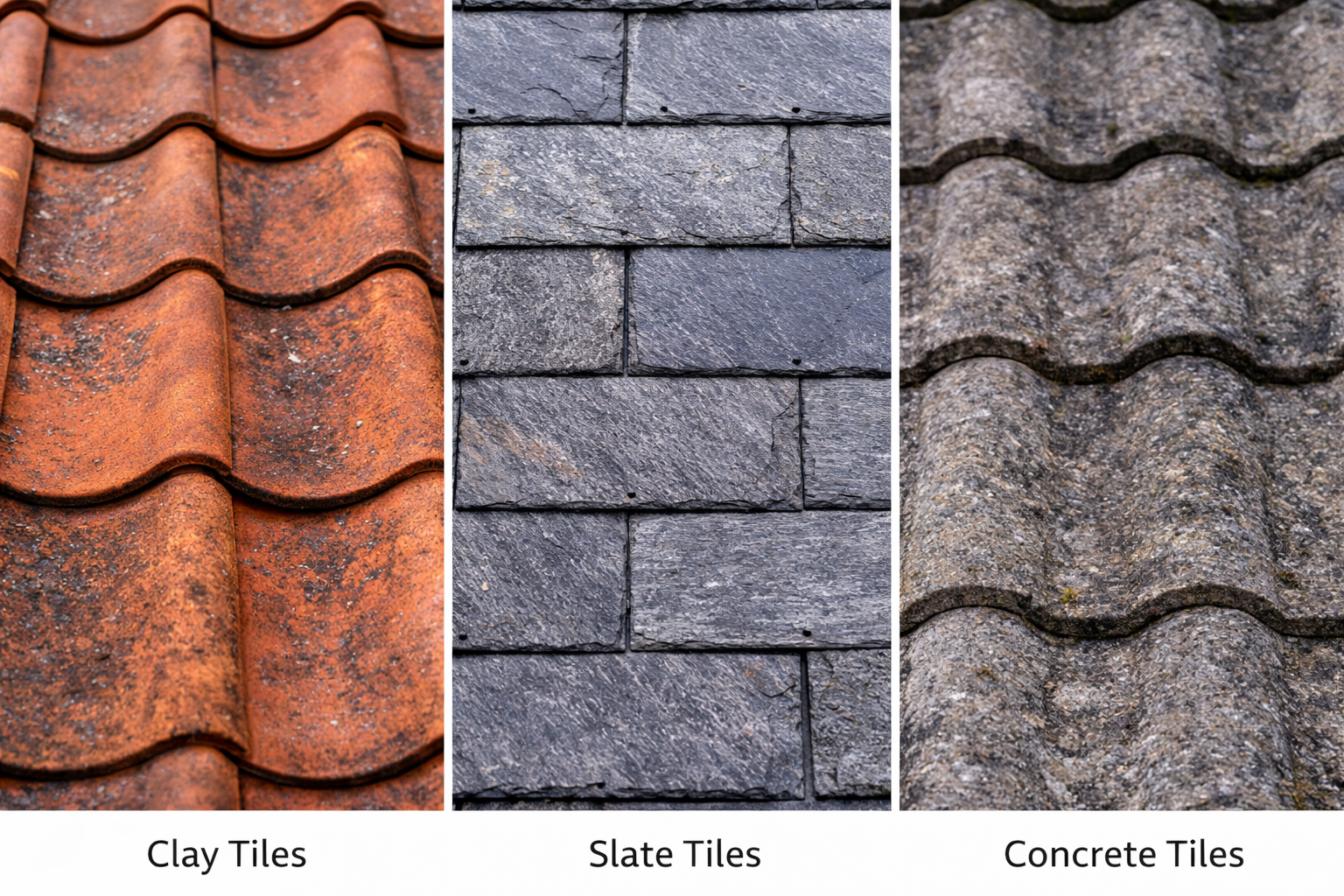
Different roof materials require different cleaning approaches. Clay and concrete tiles are the most common roofing materials in the UK and usually tolerate manual moss removal followed by biocide treatment.
Slate roofs often require gentler methods such as steam cleaning to avoid damaging the tile surface. Heritage properties or older roofs may require specialist care.
How much does roof cleaning cost in the UK?
Roof clean prices vary depending on roof size, pitch, access and moss severity. A small semi-detached home with light moss will usually cost less than cleaning a large detached property with heavy growth.
Other factors affecting price include scaffolding requirements, roof height and the cleaning method used.
For a full breakdown of typical pricing ranges see our roof moss removal cost guide.
Roof cleaning near you
We publish local guidance pages and connect homeowners with trusted professional roof cleaners across many UK towns and cities.
FAQs
Ready to clean your roof safely?
Get guidance from the UK’s roof moss removal knowledge hub and request quotes from trusted professionals.